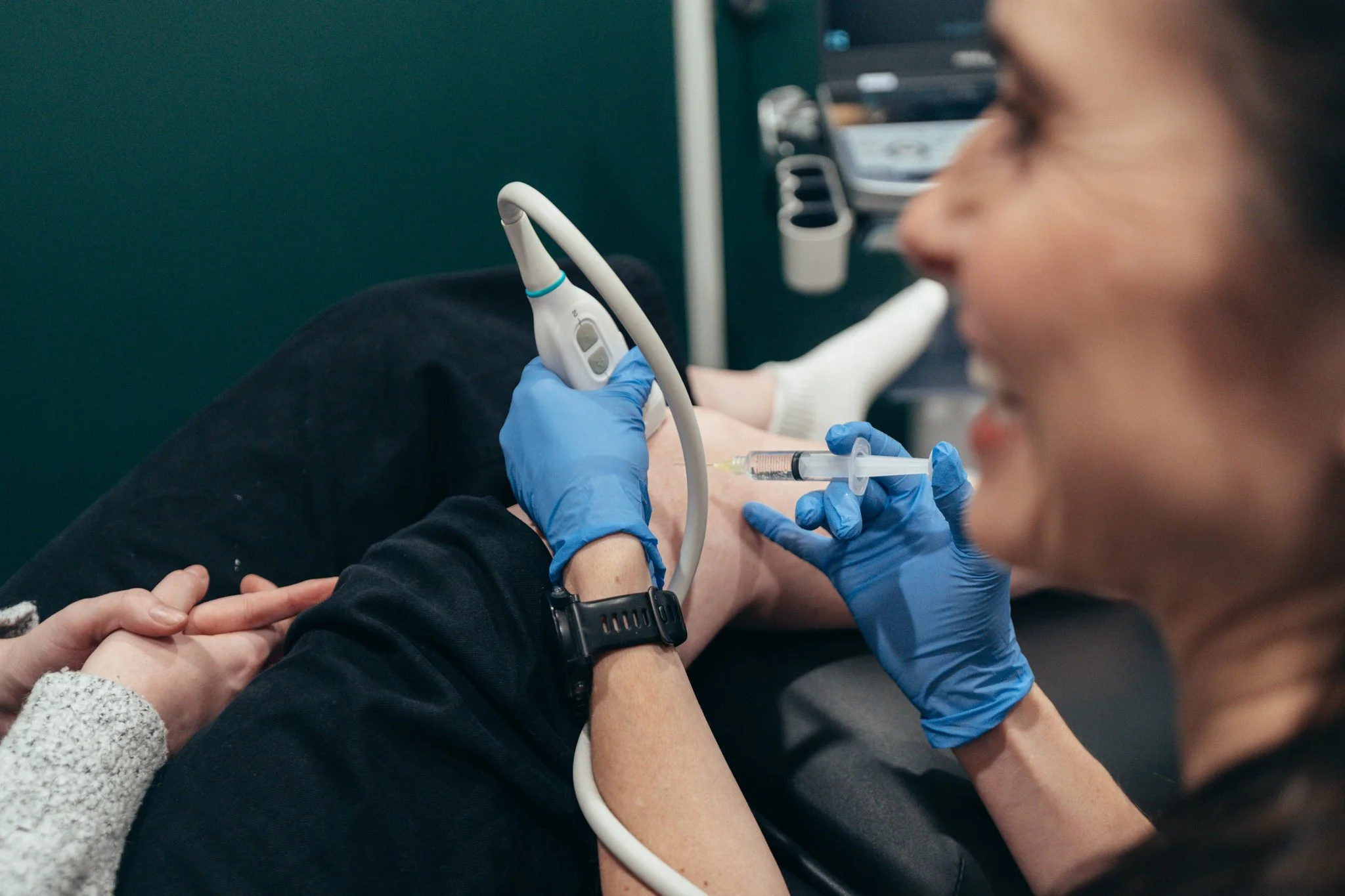

If pain lingers on the outside of your elbow for months — despite rest, braces, or physical therapy — you’re not alone. Tennis elbow (lateral epicondylitis) is one of the most persistent tendon problems seen in both athletes and everyday workers. And while it often starts with a simple overuse injury, chronic cases can signal deeper degeneration within the tendon where healing stalls.
So, what can you do when traditional treatments aren’t enough? For many patients, targeted injection therapies can help restart the healing process and reduce pain.
Why Traditional Treatments Sometimes Fall Short
Standard care such as rest, ice, and basic anti-inflammatory medications may help early on, but they don’t always heal the underlying tendon damage. That’s because chronic tendon pain often comes from weakened collagen fibers and poor blood flow, not just irritation.
That’s why regenerative and targeted injection therapies are becoming popular — they aim to address the root cause, not just the symptoms.
Injection Options That May Help
Here are a few regenerative and non-regenerative injection options that clinics may use for stubborn cases:
1. Platelet-Rich Plasma (PRP)
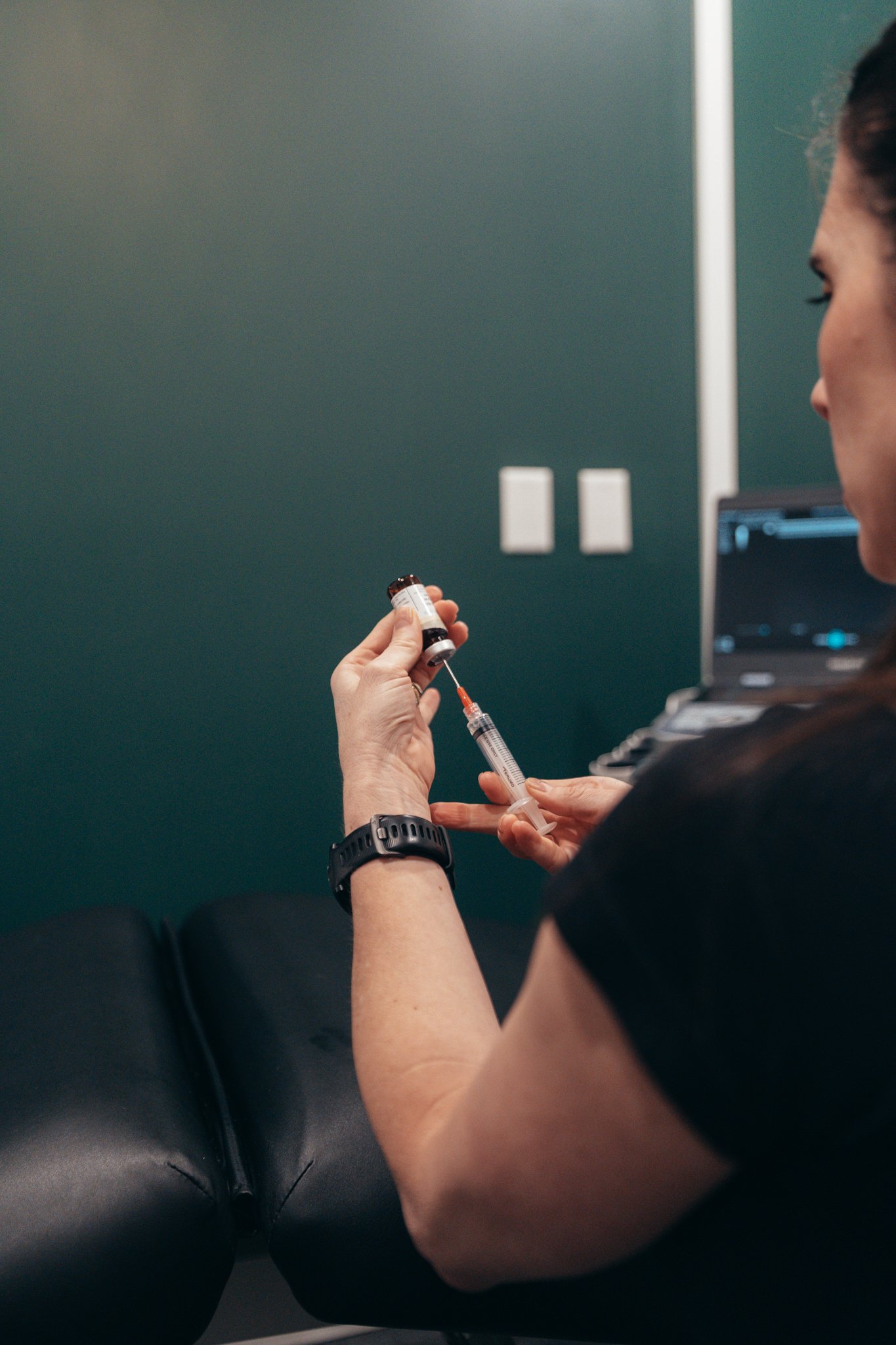
PRP uses your own concentrated platelets to deliver growth factors directly to the injured tendon. Clinical studies show that PRP can promote true tendon healing by stimulating collagen remodeling. PRP treatments guided by ultrasound are most accurate. I wrote more about PRP here.
2. Hyaluronic Acid Injections
Hyaluronic acid (HA) injections act as a viscoelastic gel that improves tendon gliding and reduces friction at the tendon–bone interface. It also has biological effects that can modulate inflammation and aid tendon regeneration. Clinical studies show that a short series of HA injections can decrease pain, improve grip strength, and enhance functional recovery — often with minimal downtime and without the risks associated with steroids. I wrote more about HA here.
3. Prolotherapy
Prolotherapy works by injecting a mild dextrose solution to trigger a gentle healing response. The idea is to stimulate tissue repair through mild irritation, encouraging your body to strengthen and thicken weak tissues. It’s often chosen by patients seeking a natural, low-risk treatment for chronic tendon injuries. I wrote more about prolotherapy here.
4. Perineural Injection Therapy (PIT)
Sometimes, stubborn elbow pain isn’t just about the tendon — irritated sensory nerves nearby can play a role too. PIT uses micro-injections of buffered dextrose along these nerve pathways to calm irritation and reduce pain sensitivity, often improving movement tolerance in chronic cases.
5. Corticosteroid Injections
Cortisone shots can deliver rapid pain relief but may weaken the tendon if used repeatedly. They are best reserved for short-term relief in acute or severe cases rather than long-term management. I wrote more about steroid injections here.
Choosing the Right Injection for You
Every case of tennis elbow is unique, and the most effective treatment depends on your specific tendon health, symptom duration, and activity goals. Many patients benefit from a customized combination, such as PRP for healing followed by hyaluronic acid injections for smoother tendon recovery.
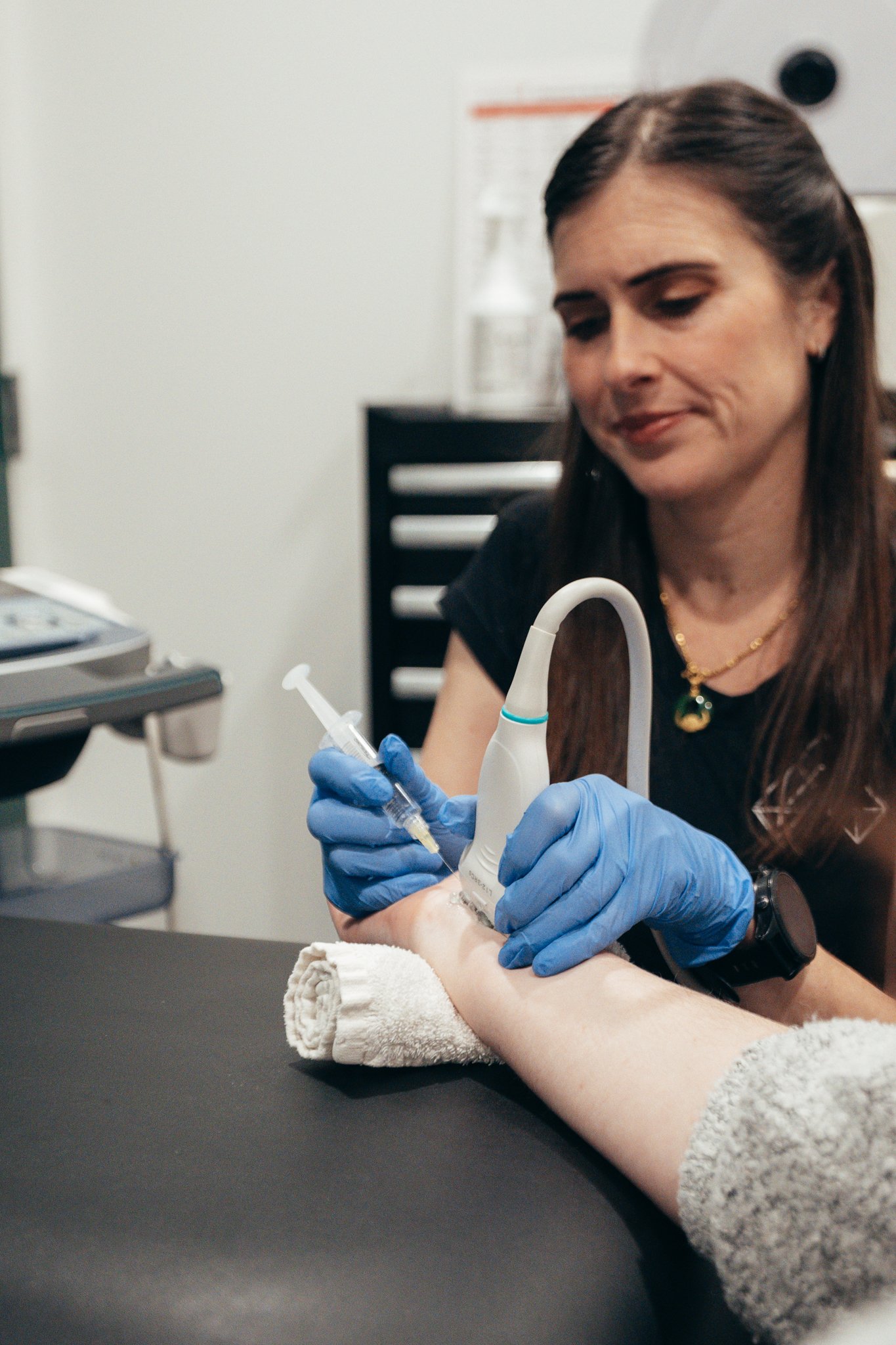
At our clinic, all procedures are performed using ultrasound guidance to ensure accuracy, comfort, and the best possible results.
The Bottom Line
If your tennis elbow has refused to heal despite exercises and physical therapy, an advanced injection approach might be what your tendon needs. By stimulating the body’s natural repair mechanisms, many of these options go beyond masking pain — they aim to restore healthy tissue and get you back to your activities without constant discomfort.
Ready to explore your options? Schedule an injection consultation to see which injection therapy fits your condition and goals best. With a personalized plan, recovery is not just possible — it’s probable.